
Fire Ant Control Challenges in Florida Agriculture
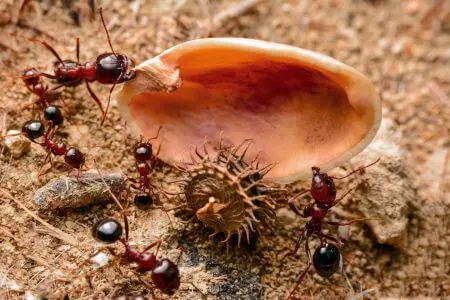 Florida agriculture gives fire ants almost everything they need: warm weather, open ground, regular moisture, and plenty of undisturbed places to establish colonies. For growers and farm managers, however, the problem goes beyond a few mounds scattered along a field edge. Colonies can interfere with workers, livestock, irrigation, harvesting, young plants, and day-to-day equipment use. Fire ant control challenges in Florida agriculture are also complicated by acreage, changing weather, crop restrictions, and the constant possibility of new colonies moving onto treated land.
Fire Ant Specialists has worked with Florida agricultural properties since 1993, including horse farms, nurseries, pastures, hayfields, and large acreage. Its professional broadcast approach is designed to provide consistent coverage while minimizing interruption to normal farm operations.
Why Are Florida Farms So Attractive to Fire Ants?
Agricultural land often contains exactly the conditions fire ants favor.
Pastures and crop fields provide open, sunny soil. Irrigation adds dependable moisture. Fence lines, equipment areas, barns, pond edges, and less-disturbed corners give colonies places to become established without being noticed immediately.
A single farm can also contain several different environments. One section may be irrigated cropland. Another may be grazing pasture. There may be a nursery area, drainage ditch, equipment yard, or wooded border nearby.
That variety makes control more complicated because activity is rarely distributed evenly across the property.
Florida’s climate adds another challenge. Unlike areas with long periods of severe winter weather, much of the state provides favorable conditions for fire ant activity through a large portion of the year.
How Can Fire Ants Affect Agricultural Work?
Sometimes the biggest cost is not damage to the crop itself. It is interference.
Fire ant colonies can appear around irrigation equipment, tree rows, harvest areas, gates, fence lines, and places where employees routinely work. UF/IFAS notes that high mound densities in citrus groves can create problems for workers maintaining irrigation systems and for crews during harvest.
Mounds can also become obstacles for mowing and other equipment. For livestock operations, the concern shifts again. Animals spend much of their time close to the ground and may disturb colonies while grazing, resting, or moving around feeding and watering areas.
A farm manager is therefore not dealing with one type of exposure. The problem changes depending on what happens in that particular part of the property.
Can Fire Ants Damage Crops?
In some situations, yes. Fire ants can cause direct damage in Florida citrus, particularly around young trees. Colonies may establish near irrigation lines or beneath wraps placed around young trunks.
There is another interesting complication. Fire ants are predators and may consume other insects, including some agricultural pests. But they can also interfere with beneficial insects. They may attack natural enemies such as lady beetles and lacewings that would otherwise help suppress pests including aphids.
Agricultural fire ant management is therefore not always as simple as assuming every ant has exactly the same impact in every crop. The crop, production system, and site all matter.
Why Do Fire Ants Keep Coming Back?
Agricultural land is rarely isolated. Even after a successful treatment, surrounding properties can remain active. Newly mated queens can also establish fresh colonies, while existing colonies may move in response to flooding or other changing conditions.
For that reason, long-term control is usually more realistic than treating only when mound numbers become severe.
Fire Ant Specialists generally recommend scheduled applications during the year to maintain suppression across large properties rather than repeatedly starting over after populations build again.
Address Fire Ant Control Challenges in Florida Agriculture with a Property-Wide Plan
The biggest fire ant control challenges in Florida agriculture come from the variety and scale of the land itself. Crops, livestock, employees, irrigation, weather, acreage, and surrounding properties all affect how a treatment program should be planned. A pasture cannot always be approached the same way as a nursery, and a 300-acre farm needs a different strategy from a two-acre residential lot.
Fire Ant Specialists provides professional fire ant control for Florida farms, nurseries, horse properties, pastures, hay fields, and other agricultural acreage. With calibrated broadcast equipment and decades of experience working around active farming operations, the company can develop a program based on the property and how it is used. Call Fire Ant Specialists at 352-291-2687 or request a free estimate to discuss fire ant management for your agricultural property.
Custom Application
Service Guaranteed
We use a safe and effective process that will eliminate the worry of fire ants from your farm, nursery, home or business.
With just 2-3 treatments per year and our guarantee results, we can establish and sustain a great fire ant control program for your property. Our system works deep to get at fire ants you can’t see. Not only will you save a lot of money, you will believe that fire ants can be controlled.

And the guarantee is simple:

If our service does not work within the time frame specified to you at the time of application, we will spot treat the area of infestation at no charge.
Looking for
Fire Ant Specialists
Specialists in Florida?
We welcome your questions and will provide an estimate upon request.
Simply fill out the information to the right or call us Monday thru Friday, from 8:00 am to 4:00 pm.


Request a
Free Estimate
Send us a request. Our treatment is fast, affordable, effective, and guaranteed.